
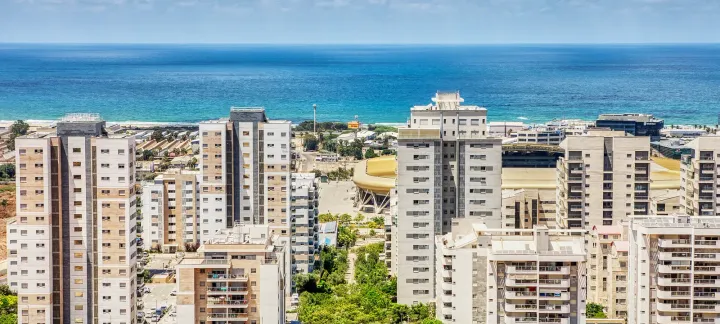
Properties along the Bulgarian Black Sea coast continue to attract different groups of buyers – families looking for a second home, people planning a move to a seaside city, investors aiming to let out, and buyers who want to keep part of their capital in a real asset.
This variety of demand is one of the reasons seaside properties are seen as a relatively resilient long-term investment. The market, however, is not the same everywhere. An apartment in an established area of Varna, a home in a year-round resort and a studio in a highly seasonal complex are three completely different products, even though they are all close to the sea.
That is why the phrase “stable investment” should not be understood as a guarantee of constant price growth or secure returns. It is more accurate to say that well-chosen coastal properties can retain buyer interest thanks to the limited number of quality locations, tourist demand, the possibility of year-round use and the different rental models.
Official data also show that the housing market in Bulgaria continued to record growth in 2025. In the fourth quarter, home prices in the country were 12.6% higher than in the same period of 2024. This is a national indicator and does not mean equal price increases in every seaside area, but it shows the generally strong price environment in which the coastal market also operates.
1What makes a seaside property different from a standard city home
The investment potential of a seaside property usually consists of several possible benefits:
- use by the owner for part of the year;
- long-term letting;
- short-term or seasonal letting;
- preserving value over the long term;
- the option of a later sale;
- combining personal use and income.
This flexibility sets a quality coastal property apart from an asset designed for only one type of tenant. An apartment in Varna, for example, can be let to working people, families, students or city visitors depending on the area, size and furnishing. A property in a resort area usually relies more on the tourist season, but can also be attractive as a second home.
It is precisely the possibility of more than one scenario that makes some seaside homes more resilient when the market changes. If short-term letting is temporarily not profitable enough, a property in a suitable city area can switch to long-term rent. In a strictly holiday complex, this option is often more limited.
2Limited supply of quality locations supports value
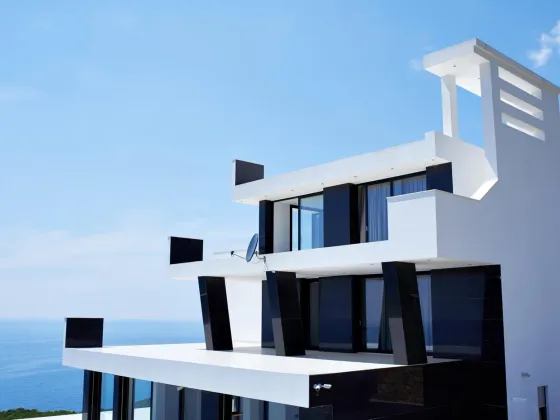
The seafront is a limited resource. You cannot create an unlimited number of properties with a genuinely good location, an open view, convenient beach access and working infrastructure.
This does not mean that every apartment with the words “sea panorama” in the listing is rare or valuable. A partial view between future developments, difficult beach access or a location without year-round services does not have the same investment value as an established area.
The strongest performers are properties that combine several hard-to-replace qualities:
- genuine proximity to the sea;
- convenient access by car and on foot;
- normal urban or resort infrastructure;
- parking options;
- a good environment around the building;
- a functional layout;
- quality construction;
- limited competing supply.
With such a combination, the owner does not rely only on general market appreciation. The property itself remains of interest to a wider group of buyers.
3Varna has the advantage of being a year-round city
When analysing seaside properties, it is important to separate the large coastal cities from the seasonal resorts. Varna does not depend solely on summer tourism. The city has permanent residents, universities, hospitals, administrative services, commerce, cultural life and a range of employment sectors.
This creates year-round housing demand. Depending on the area, an apartment may be suitable for:
- a permanent family home;
- a long-term rental;
- a student rental;
- housing for working professionals;
- short-term tourist use;
- a second home.
Transport, infrastructure, jobs, universities and the real possibility of renting out or selling the property all matter.
This distinction is especially important for buyers who are looking for stability rather than just maximum income over two or three summer months.
4Tourism creates additional, but not the only, demand
Tourist activity supports interest in coastal properties, especially well-located and functional homes for short-term stays.
NSI data for Varna Province show a steady recovery and growth of tourist activity in recent years. In the regional statistics presented, overnight stays in the province rise consistently and reach over 4.75 million in the latest year shown.
Even in November 2025, outside the main summer season, 137 accommodation establishments with at least 10 beds were operating in Varna Province, and the number of beds was 4.2% higher than in November of the previous year. This shows that tourist activity does not stop completely with the end of the season, although its volume is significantly different from the summer.
Nationally, over 1 million overnight stays were recorded in November 2025, an increase of 8.8% year on year. These figures cannot be directly translated into expected yield for a specific apartment, but they confirm the presence of active tourist consumption.
The tourist flow does not guarantee occupancy
Owners often make the mistake of treating a good tourist season as an automatic guarantee that their property will be occupied all the time.
The real result depends on:
- the exact location;
- competition in the area;
- the quality of the furnishings;
- the number of beds;
- parking;
- access to the beach;
- ratings from previous guests;
- booking management;
- pricing policy;
- cleaning and maintenance costs.
Two apartments in the same resort can achieve completely different results. That is why tourist data should be viewed as the general market environment, not as an individual forecast.
5The option of personal use increases practical value
Unlike a financial asset, a seaside property can also bring non-financial benefits. The owner can use it for holidays, remote work, stays by relatives or future permanent living.
This matters when assessing the investment. A home that does not deliver the maximum possible rental yield can still be valuable to the family if it replaces hotel costs and offers a long-term possibility of use.
However, personal preferences must be clearly separated from the financial analysis. When the owner uses the property during the strongest summer weeks, they give up the potentially highest short-term rental income. This is not necessarily a mistake, but it must be taken into account when calculating the expected yield.
6Seaside properties offer different rental models
Long-term rental
It is best suited to homes in seaside cities and areas with year-round services. It offers more predictable income and requires less day-to-day management.
The advantages are usually:
- more consistent occupancy;
- fewer tenant changes;
- lower cleaning costs;
- easier budgeting;
- less dependence on the tourist season.
The drawback is that monthly income may be lower than the full potential of a strongly performing short-term property.
Short-term rental
This model can bring higher gross income in the peak months, but it requires active management.
The owner should allow for:
- platform commissions;
- professional cleaning;
- changing and laundering linen;
- consumables;
- communication with guests;
- repairs and faster wear;
- empty periods;
- tax and administrative obligations;
- management or a commission to an external company.
After deducting these costs, the difference compared with a long-term rental may be smaller than expected.
Mixed model
Some owners use the property for short-term lets in summer and rent it out for a longer period during the rest of the year. This strategy can work in the right locations, but it requires careful planning of the dates and the tenant profile.
A more detailed comparison of the different property types and their possible yield is covered in the article “Studio, one-bedroom or house – which property is the most profitable to rent out”.
7Which seaside properties usually keep their appeal
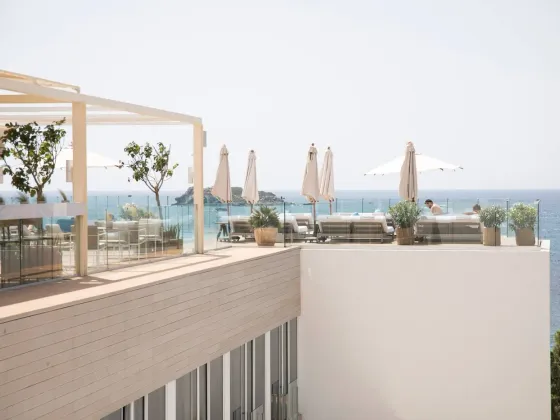
The most resilient properties are not necessarily the most luxurious or the closest to the water. It matters more that they are easy to use, rent out and later resell.
Compact apartments with a functional layout
Studios and one-bedroom homes are often accessible to a wider group of buyers. They can suit couples, tourists, students, working people or those looking for a second home.
It is important that the space is used practically. An overly small property without a proper kitchen, storage space or a separate sleeping area may have more limited demand.
Homes in year-round active areas
Shops, public transport, medical services and normal access in winter are significant advantages. An area that is lively only in July and August carries a different risk from an urban area or an established year-round resort.
A property with a parking space
In coastal areas, parking is often a serious problem during the peak season. A dedicated parking space or a realistic chance of parking can raise both convenience and competitiveness when letting and selling.
A home with low and transparent maintenance costs
A luxury complex with a pool, security and landscaping may look attractive, but a high annual fee reduces the net yield. The buyer should know how the fee is set, what it includes and whether it can be changed.
8Liquidity depends on the target group
A liquid property is one that can be sold within a reasonable time at a realistic price. A seaside location may help, but it does not guarantee liquidity.
A wider circle of buyers usually exists for:
- one-bedroom and practical two-bedroom homes;
- apartments in established areas of Varna;
- properties with good transport links;
- homes with a regular legal status and proper documents;
- properties without an excessive maintenance fee;
- apartments with a lift and parking;
- homes suitable for year-round living too.
Harder to sell can be overly large holiday apartments, properties with an unclear status, homes in unfinished complexes or properties with high ongoing costs.
That is why the buyer should ask themselves right from the start: “Who would buy this property from me in five or ten years?”.
9The main risks of a seaside investment
Strong seasonality
Income can be concentrated in a limited number of weeks. A poor season, increased competition or a change in tourist behaviour can reduce the result.
High maintenance fees
The annual fee may cover the pool, security, reception, green areas and common parts. When the property is not let enough, these costs fall on the owner.
Faster physical wear
Salty air, humidity, strong wind and intensive use can increase the need for maintenance of the facade, windows and doors, metal elements, air conditioners and furnishings.
Oversupply
In some resort areas there are many similar apartments. When dozens of owners offer an almost identical product, competition is driven mainly by price.
Incomplete infrastructure
Proximity to the sea does not make up for a poor road, lack of sewerage, problematic water supply or an absence of services in winter.
Legal and construction problems
It is necessary to check the status of the property, commissioning, encumbrances, the maintenance contract and the rights to the land and common parts.
10How to calculate the real yield
Do not compare only the purchase price with the expected total rental income. For a realistic assessment, include all initial and ongoing costs.
Initial costs
- property price;
- local tax and notary costs;
- agent and legal services;
- furnishing;
- renovation;
- appliances;
- preparation for letting.
Annual costs
- maintenance fee;
- local taxes and fees;
- insurance;
- repairs;
- supplies;
- management;
- cleaning;
- platform commissions;
- periods without tenants;
- income tax.
Net yield should be calculated on the entire capital invested, not just on the advertised price of the apartment.
For example, a property with impressive summer income may turn out to be a weaker investment than a city home with a lower but steady monthly rent, if it has high fees, expensive management and long vacant periods.
11How to choose a more sustainable seaside property

Before buying, check:
- Is there year-round demand in the area?
- Who are the realistic future tenants or buyers?
- What is the competition from similar properties?
- What are the full maintenance costs?
- Can the home be rented out long-term?
- Is there convenient parking?
- What is access like in winter?
- Does it have a proper legal status and has the building been commissioned?
- What is the condition of the common areas?
- Is there provable income, not just promised income?
- What is a realistic price for a later resale?
- Will the property stay attractive even without the sea view as its only argument?
Listings on the market can serve as a guide, but asking prices are not the same as the sale prices actually achieved. The National Statistical Institute defines market prices as the real prices of sales, excluding accompanying fees and costs, which is an important distinction in any analysis.
12Stability comes from the quality of the choice, not just the sea
Seaside properties can be a lasting long-term asset when they combine a quality location, clean paperwork, sensible running costs and more than one possible way of being used.
The most stable choice is usually not the home that promises the highest yield in the advertisement. A more reliable property is one that can be used year-round, rented to different groups, maintained at a reasonable cost and remain of interest to a future buyer.
Varna and the established coastal areas have the advantage of real urban, tourist and residential demand. This does not remove the need for an individual assessment, however. Every project, complex and apartment must be analysed according to the specific price, infrastructure, costs and expected net yield.
The sea is a strong factor of appeal, but a stable investment is built on the right combination of location, functionality, liquidity and realistic financial planning.
Comments
There are no comments yet. Be the first to share what you think about the article.