

Renting out a property can be a stable source of income, but only if the relationship between owner and tenant is well settled from the very beginning. Many problems arise not because the parties had bad intentions, but because the contract was too general, incomplete or drawn up in a hurry. Verbal agreements often sound sufficient at the moment of moving in, but in a dispute they make it hard to prove who promised what and what obligations each side took on.
A professional rental contract does not need to be unnecessarily complicated, but it must be clear. It should describe the property, the parties, the term, the rent, the deposit, the payments, responsibility for damage, utilities, maintenance, the conditions for termination and the way the home is handed over. The more precisely these matters are recorded, the lower the risk of misunderstanding.
For the owner, a good contract is a form of protection. It is not just a document signed as a formality, but a tool that sets out what happens if the tenant stops paying, damages the property, leaves without notice or refuses to cover their obligations. That is why the contract must be prepared carefully, rather than using a random template without checking whether it fits the specific property and situation.
1Why a written rental contract is so important

A written contract gives security to both parties, but it is especially important for the owner. It proves what rent was agreed, what the term is, what deposit was paid, what the rules for using the property are and under what conditions the contract can be terminated.
Without a written contract, the owner can end up in a difficult position over unpaid rent, unpaid bills or damage. Even if the parties have agreed verbally, proving those arrangements can be complicated. With a written contract the rules are clear and the landlord's position is much easier to defend.
What should be clear from the start
Before signing, it is good for the owner to settle the main terms and not leave important topics for later. Problems most often start from vague arrangements.
From the start, the following should be settled:
- who exactly will live in the property;
- what the term of the lease is;
- what the monthly rent is;
- when and how the rent is paid;
- what deposit is paid;
- who pays the utilities;
- how damage and repairs are covered;
- how the contract is terminated;
- in what condition the home is handed over and returned.
These matters should be written into the contract, not just discussed verbally.
2Precise identification of the parties and the property
Every professional rental contract begins by clearly naming the parties. The full names, personal ID number, address and ID card details of the landlord and the tenant must be recorded. If the property is let by a company or rented by a company, the details of the legal entity are given: company ID number, registered office, representative and the basis of representation.
The property must also be described precisely. It is not enough to write only “an apartment in Varna”. The address, floor, area, apartment number, ancillary rooms, parking space, garage or other parts provided for use must be stated.
Why the property description matters
An accurate description protects against disputes over what was included in the rent. If the tenant uses a cellar, parking space, courtyard or storage room, this must be recorded. If certain rooms or items are not part of the rental, that must also be clear.
For furnished homes, it is good to attach a handover protocol to the contract. It describes the condition of the property, the furniture present, appliances, keys, remote controls, electricity meters, water meters and other important details. That way, on departure, you can compare what was handed over with what is being returned.
3Contract term and renewal conditions
The contract term is one of the most important clauses. It shows for what period the property is let and when the parties should discuss renewal, termination or a change of terms.
The contract can be fixed-term or open-ended. With a fixed-term contract, the start and end dates are clearly recorded. With an open-ended contract, it is especially important to have a precise notice clause, so as to avoid a dispute over when and how it can be terminated.
What to record about renewal
It is good practice to state whether the contract can be renewed and under what conditions. For example, the parties can agree that one month before the term expires they will discuss extending the rental. If the owner wants to keep the right to change the rent upon renewal, that should also be clear.
This avoids situations in which the tenant expects automatic extension on the same terms while the owner has other intentions.
4Rent, payment deadline and method of payment
The payment clause must be very precise. The contract must state the amount of the monthly rent, the currency, the payment date and the method of payment. It is best for payment to be made by bank transfer, because that leaves a clear trail.
If cash payment is allowed, a receipt or other written document must be issued for each payment. This protects both parties, but for the owner it is especially important in a dispute over unpaid rent.
What the late-payment clause should include
The contract should include text on what happens in case of late payment. A grace period of a few days may be provided, but after that there must be consequences. This could be a penalty, late-payment interest or a right of termination after a certain number of unpaid instalments.
It is good to record:
- on what date the monthly rent is paid;
- by what method it is paid;
- when a payment is considered late;
- whether there is a penalty for late payment;
- after how many unpaid rent payments the owner has the right to terminate the contract;
- how unpaid utilities are settled on departure.
Clear payment rules are one of the owner's strongest protections.
5The deposit as protection for the owner
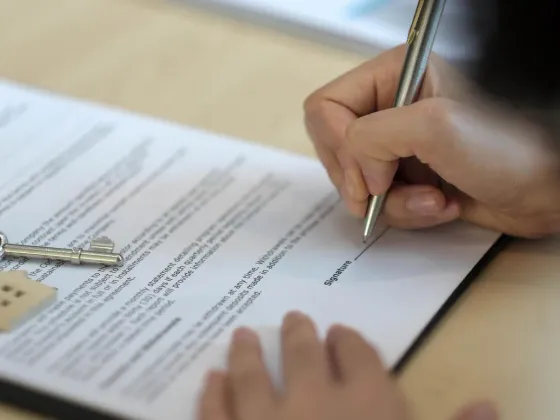
The deposit is a standard and very important part of the rental contract. It serves as a guarantee against unpaid rent, unpaid bills, damage to the property or other obligations of the tenant. The deposit is usually equal to one month's rent, but for more expensively furnished homes a higher amount can be agreed.
It is important that the deposit is not described vaguely. The exact amount, when it is paid, what it can be used for and under what conditions it is returned must all be stated.
When the security deposit can be withheld
The contract should state clearly that the deposit can be used for:
- unpaid rent;
- unpaid bills for electricity, water, heating, internet or fees;
- damage to the property, furniture or appliances;
- missing items;
- leaving without notice;
- cleaning after move-out, if the property is not returned in normal condition.
It is also a good idea to state that the deposit does not replace the last month's rent, unless the owner expressly agrees. This is a common problem – the tenant decides not to pay the last month because there is “a deposit”. If the contract says otherwise, the owner's position is much stronger.
6Utilities, fees and running costs
One of the most common reasons for disputes is utilities. The contract should therefore define clearly who pays for electricity, water, heating, gas, internet, TV, entrance fee, maintenance of common areas, lift fee, parking or complex fees.
Normally the running costs linked to using the property are borne by the tenant. If there are costs that remain with the owner, they must be stated.
Meter readings at handover
On move-in, it is a good idea to record the readings of the electricity meter, water meters, heat meters and other devices. The same is done on move-out. This avoids disputes over which bills were run up by the tenant and which came before them.
These readings can form part of the handover protocol. It is a good idea to have photos of the meters on the date of handover, especially if the property is being let for the first time or if earlier bills have not yet been settled.
7Maintenance, repairs and damage
The contract should clearly distinguish routine maintenance from major repairs. Usually, minor damage caused by use of the property or by the tenant's negligence is at the tenant's expense. More serious repairs not caused by the tenant may remain the owner's responsibility.
A problem arises when this is not written down. For example, a damaged appliance, a broken door, a leak, a blockage, damaged furniture or scratched parquet can lead to a dispute over who should pay.
How to describe responsibility for damage
It is a good idea to state in the contract that the tenant must use the property with care, report damage promptly and make no changes without the owner's written consent.
It can be specified that the tenant has no right, without permission, to:
- drill into walls and mount heavy fixtures;
- paint or change the interior;
- move or remove furniture;
- change locks;
- sublet the property;
- carry out renovation work;
- use the property for an activity other than the agreed one.
These clauses are important because they protect the property from unauthorised changes and from damage that is hard to prove.
8Number of occupants, pets and manner of use
The owner needs to know who will live in the property. If the contract is signed with one person but several more people actually move in, this can lead to faster wear, higher costs and problems with neighbours.
It is therefore a good idea to state a maximum number of occupants and whether the property may be used for residential purposes only. If subletting to third parties, short-term rental or use as an office is not allowed, this should be written down.
Pet clause
Pets are a sensitive subject. If the owner does not want animals in the property, this must be clearly written down. If they are allowed, the conditions can be described – for example an additional deposit, liability for damage, and cleaning and pest treatment on move-out.
An unclear arrangement often leads to disputes. It is therefore better for the rules to be written down in advance.
9Termination of the contract and notice
The termination clause is one of the most important for protecting the owner. It should set out when the contract can be terminated, what the notice period is and what breaches allow the owner to demand that the property be vacated.
When the owner should have the right to terminate
The contract can provide for termination in cases of:
- non-payment of rent;
- repeated late payments;
- unpaid utilities;
- damage to the property;
- breach of the homeowners' association rules;
- subletting without consent;
- use of the property for an unlawful or unagreed activity;
- refusal of access when a viewing or repair is needed;
- leaving without notice.
It is important that these grounds are worded clearly. That way the owner has better protection if the tenant fails to meet their obligations.
10Handover protocol
The handover protocol is one of the most useful documents in renting out a property. It is signed when the property is handed over and again when it is returned. It describes the condition of the home and its contents.
What the protocol should include
The protocol can contain:
- date of handover;
- condition of each room;
- list of furniture and appliances;
- readings of the electricity meter, water meters and other devices;
- number of keys, cards and remote controls;
- description of visible defects;
- photographs, if possible;
- signatures of both parties.
This document is very important in a dispute over damage. Without it, it is hard to prove whether a given defect existed before move-in or arose during use.
11Notarial certification and stronger security

Not every rental contract has to be notarised, but in some cases it can be a sensible step. For longer-term contracts, more expensive properties, corporate tenants or more specific terms, it is a good idea to discuss the option of notarisation and registration, where applicable.
Notarisation and registration can give greater security, especially when the contract is for a longer term or when the parties want stronger protection of the arrangements. In such cases it is sensible to have the contract reviewed by a specialist so that important details are not missed.
12How the owner can protect themselves even before signing
The contract is important, but protection starts even before it. The owner should choose the tenant carefully, talk openly about the terms and not rush just because they want the property not to stand empty. An unsuitable tenant can cause more losses than a month without rent.
Before signing, it is a good idea to do the following:
- hold a detailed conversation with the applicant;
- clarify who will live in the property;
- make the length of the tenancy clear;
- discuss the way of payment;
- sign a contract before handing over the keys;
- receive a deposit before the tenant moves in;
- draw up a handover report;
- photograph the condition of the property.
These steps reduce risk and show that the relationship is being handled professionally.
13A secure tenancy starts with clear rules
A professional rental contract protects the owner, but also brings peace of mind to the tenant. When the rules are clear, there are fewer reasons for disputes. Everyone knows what they owe, when they must pay, what they may do in the property and what happens on termination.
The most important clauses are those on payment, deposit, utilities, damage, term, notice, manner of use and return of the property. If they are well written, the owner has much better protection in case of a problem.
Renting out should not be done on trust alone. Good relations matter, but a clear contract is what protects the property, the income and the owner's peace of mind. That is why every tenancy should begin with a well-prepared document, an accurate report and realistic rules that can be applied in practice.
Comments
There are no comments yet. Be the first to share what you think about the article.