

You have found the apartment you are looking for and everything looks fine. Then you learn that the seller is still paying off the home loan and the property is mortgaged to the bank. This is no reason to give up. Such transactions happen often and with good organization they pass safely.
The important thing is to understand exactly what you are buying, where your payment is going and when the property actually becomes vacant. Let's sort it out step by step.
1What does it mean that the property is mortgaged?

A mortgage is collateral for a loan. As long as the loan is not repaid, the bank has the right to take satisfaction from the property if the debtor does not pay. This right follows the property, not just its owner.
Therefore, a buyer who simply pays the seller and signs can be left with a home that the bank still has a claim on. This is exactly what we want to avoid.
2How the mortgage is seen: the certificate of encumbrances
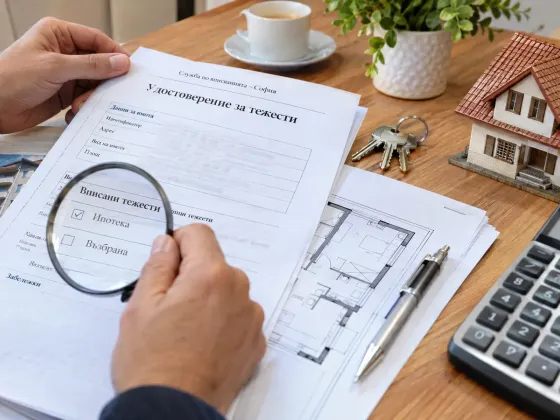
The mortgage is entered in the land registry and can be seen in the encumbrance certificate. This document shows what entries there are on the property: mortgages, foreclosures and other encumbrances.
It is recommended to check it at the beginning, and not on the day at the notary. The notary also requires it during the transaction, but the earlier you know about the mortgage, the more time you have to plan. We consider what other documents are needed in the article Notary deed, sketch, certificate of encumbrances - what documents are needed when buying.
If there are other entries in the certificate besides the mortgage, for example a foreclosure, things are more complicated. Then it is a good idea to consult a lawyer or a notary before making a commitment.
3The main idea: the loan is repaid by the price

In most cases, the scheme is as follows. The seller owes the bank a certain amount. Part of the price you pay is used to pay off this debt. The balance goes to the seller. After repayment, the bank agrees to cancel the mortgage.
The price of the property and the balance on the loan are two different things. If the price covers the debt, the deal is easy to settle. If it does not cover it, the seller must pay the difference from his own funds. This is something that should be clarified before the down payment.
4Coordination with the seller's bank
The bank is the third party in the transaction, although it does not sit at the notary's table. Usually, things go through several steps:
- The seller notifies the bank that he intends to sell the property;
- The bank issues a report on the balance of the loan on a certain date;
- The bank tells how and where the repayment amount should be transferred;
- After the payment, the bank provides a document that the obligation has been repaid and that it gives consent to cancel the mortgage.
Different banks have different internal rules and deadlines. Therefore, it is safest for the seller to contact the bank early and ask for precise instructions in writing. Do not rely on verbal agreements.
If you also use credit
When you buy with a bank loan, there are two banks in play: the seller's and yours. Then the coordination is denser because your bank also wants to receive the property as collateral, without foreign encumbrances on it. Often the two institutions need to synchronize in the order of payments. Nov Vek does not grant loans and does not act as a bank, but it can refer you to banks and help the process go without unnecessary pauses.
5Cancellation of the mortgage
Once the debt is paid off, the mortgage does not automatically disappear. It needs to be deleted from the property register, which is done on the basis of a document from the bank and according to the established procedure. The details depend on the specific case, so ask the notary exactly what will be required.
From the buyer's point of view, it is useful to know one thing: until the deletion has taken place, the mortgage may still be visible in the register. Therefore, it is reasonable to agree clearly in the contract who will take care of it and how.
6What to ask for as a buyer
Here are a few things we recommend holding on to:
- Written statement from the bank about the balance of the loan, not just the words of the seller.
- Clear payment mechanism. The debt to the bank is paid off directly from the price, not with a promise that the seller will "fix it later". How exactly this will be done, discuss with the notary and the bank.
- Negotiated clause in pre-contract. Be on record that the property is being sold with a mortgage, that it will be paid off from the price, and that the seller is assisting in erasing it.
- Consent or written document from the bank if required under its contract with the seller.
- Recheck immediately before signing. Encumbrance certificate changes over time.
Read more about down payments and clauses that protect the buyer in Legal pitfalls when buying a home - what to check before down payment.
7The risks and how to avoid them
The most common problems come from being rushed and not having written guarantees.
The seller receives the money, but does not repay the loan. Therefore, it is best that the money for the debt reaches the bank in a way that the notary and the bank have specified in advance, and not pass through the hands of the seller without control.
The loan balance is higher than expected. There are interest and other obligations that may change until the day of the transaction. Ask for an up-to-date reference close to the payment date.
Other entries in the register. In addition to the mortgage, there may be other encumbrances. It is not solved by repaying the loan.
Improperly prepared preliminary contract. If it is not clear who does what and until when, in case of delay you bear the risk. For typical pitfalls, see the article How to avoid fraud when buying property.
8Role of the notary, the bank and the broker
The Notary verifies the legal status of the property, including encumbrances, and formalizes the transaction. He can explain how to most safely arrange the payment in the particular case.
The bank confirms the balance of the loan, accepts repayment and provides the documents needed to cancel the mortgage.
The Broker does not replace the notary or the bank, but coordinates the people and the schedule: knowing when what document is needed, not wasting time between the parties and not missing anything. At Nov Vek we see this as part of our work on a secure deal in Varna.
9Frequently asked questions
Can I buy a property that is still mortgaged?
Yes, this is common practice. The condition is that the transaction is organized so that the loan is repaid and the mortgage is cancelled. For the specific case, consult a notary.
Who pays the balance on the seller's loan?
It is usually paid off from the price paid by the buyer. If the price is less than the debt, the seller must provide the difference from his own funds.
What if the seller doesn't want to disclose the credit?
This is an alarm signal. The Encumbrance Certificate shows the mortgage regardless of the seller's wishes. If there is any hesitation or misunderstanding, better stop and ask for clarity before any payment.
10In short
A seller's mortgage is not an obstacle, but it does require an order: a registry check, a written reference from the bank, a payment that reaches the bank, and the mortgage is discharged. If you would like to discuss a specific property in Varna and arrange the steps calmly, the Nov Vek team is available.
Comments
There are no comments yet. Be the first to share what you think about the article.