

When buying a home is an investment decision, the question “new or older construction?” has no universal answer. Both types of property can be good investments, but under different conditions, goals and time horizons. A property in a new building may offer lower maintenance costs and more modern features, while a home in an older building sometimes wins with an established location, immediate readiness for use and the chance to increase its value through renovation.
In 2026 the right approach is not to declare one type of construction categorically better. It is more important to establish what the investor receives for the total sum they will put in, what additional costs await them and how easily the property could be let or sold in the future.
That is why the comparison should start not from the year of construction, but from the investment goal.
1New or older construction – why is there no single right choice?
Two homes of the same area can be completely different investments. The price per square metre is only one factor. What matters are the area, the condition of the building, the specific apartment, the repairs needed, the monthly costs, demand for similar homes and the possibilities for future resale.
When comparing, it is sensible to look at least at:
- the total sum for acquiring the property and bringing it to a usable state;
- expected costs for repairs and maintenance;
- the possibility of letting the property without a long preparation period;
- the features that would matter to a future buyer;
- the condition not only of the apartment but of the whole building;
- the prospects for the specific area.
That is exactly why the label “old” or “new” is not enough for an investment decision.
2What are the investment advantages of new construction?
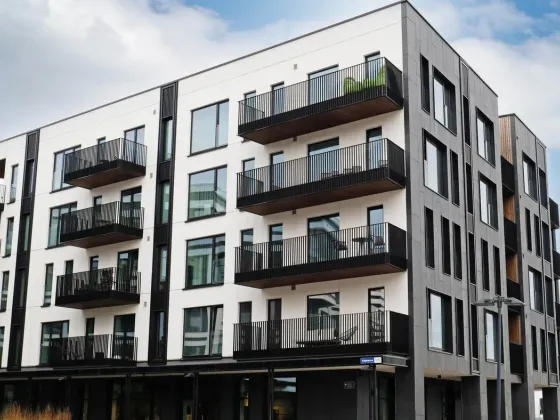
New residential buildings are usually designed to modern requirements and user expectations. With a well-executed project, this can matter both for future letting and for resale.
The main investment advantage is that the buyer acquires a property and common areas that have not accumulated decades of wear.
Lower Risk of Immediate Repairs to the Building
With well-built new construction, major repairs to the roof, façade or heavily worn shared installations should not be needed straight after purchase.
This doesn’t mean a new property comes without costs. An apartment bought at a stage of completion that requires finishing work may need a significant extra budget before it is ready to live in or rent out.
That is exactly why, when assessing the investment, you should use the total cost of the finished property, not just the sum in the purchase contract.
Features Sought by Modern Buyers
A lift, functional common areas, parking and a more contemporary layout can make a given new property more competitive against alternatives in the same area.
It is especially important, though, not to assume automatically that all new construction has a good layout. The net usable area, the shape of the rooms, the orientation and the ratio of living area to total area need to be analysed for each specific property.
The Chance to Choose at an Earlier Stage
When buying in a project with more homes available, the investor may have a choice between:
- different floors;
- orientations;
- floor areas and apartment types;
- the position of the home within the building;
- a parking space or garage, where the project offers them.
This makes it possible to look for a property with features that are easier to sell on later.
Buying off-plan, however, has its own risk profile and requires careful checks of the documentation, the developer, the contract and the payment stages. This topic is covered in detail in NOV VEK’s guide to buying off-plan.
3What Are the Potential Drawbacks of New Construction as an Investment?
A new building does not in itself guarantee a good investment. It is especially important to assess the entry price and all the additional costs.
For some homes, funds should be set aside for:
- flooring and painting;
- bathrooms;
- a kitchen and appliances;
- lighting and furniture;
- air conditioning or other equipment;
- a parking space or garage, if needed and not included.
Once these costs are added to the purchase price, the final investment can differ noticeably from the initial asking price.
The investor should also consider how long it will take before the property starts generating income. A home under construction doesn’t have the same investment horizon as a ready apartment that can be rented out soon after purchase.
4Where Can Older Construction Have an Investment Advantage?
Older homes shouldn’t automatically be regarded as a worse asset. In certain cases they can offer a better balance between price, location and scope for improvement.
One of their most significant advantages is that the buyer is assessing an environment that already exists.
You can see the real condition of the building, the access, the street, the neighbouring properties, the traffic and the infrastructure. You are not relying solely on a plan for future development.
An Established Location Can Be Worth More Than the Age of the Building
For an investment property, the address often matters more than the year of construction.
A well-kept apartment in an older building in a lively location can be more attractive to a tenant or a future buyer than a new property in an area that doesn’t suit their daily needs.
Transport, workplaces, universities, schools, shops, medical services and convenient access to the main parts of the city are factors that influence the home’s practical value.
The Opportunity to Add Value Through Renovation
Here is one of the more interesting investment strategies for older construction.
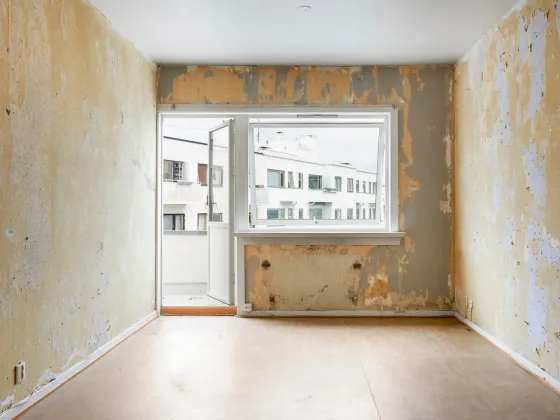
A property in poor visual condition, but in a quality building and a good location, may have potential for improvement. Through a well-planned renovation, the investor can change how it is positioned in the market.
It is important, though, to distinguish between a cosmetic problem and a structural one.
Flooring, kitchen, bathrooms and furnishings can be replaced fairly predictably. Problems with the building itself, shared installations or serious structural defects are an entirely different kind of risk.
5The Big Risk with Older Construction – the Hidden Cost After Purchase
With an older property, the advertised price is rarely enough for a real comparison.
Before buying, both the home and the overall condition of the building need to be assessed.
The potential budget may include:
- a full replacement of the electrical or plumbing installation in the home;
- new flooring, walls and ceilings;
- bathroom and kitchen renovation;
- replacing windows and doors;
- future costs for the common areas;
- roof or façade repairs;
- problems with the lift or shared installations.
As a result, a home that initially looks considerably cheaper can, after renovation, approach the price of a newer alternative.
The right comparison is therefore:
purchase price + acquisition costs + renovation + furnishing + a necessary reserve.
Only then can the two offers be put on the same investment footing.
6New vs. Older Construction for Renting Out
If the main goal is rental income, the investor should think from the future tenant’s point of view.
A tenant doesn’t pay more simply because the building is new. They assess the whole package – location, condition, furnishing, transport, layout, floor, lift, parking options and monthly costs.
That is why both new and older construction can work well.
New construction may have the edge when it offers a contemporary setting and minimal compromises. Older construction can be competitive when it is well renovated and in a stronger location.
For a rental investment, it is useful to compare at least three indicators:
- the total amount actually invested;
- the realistic market rent for the specific type of home and area;
- the expected ongoing and periodic costs.
7And What About Future Resale?
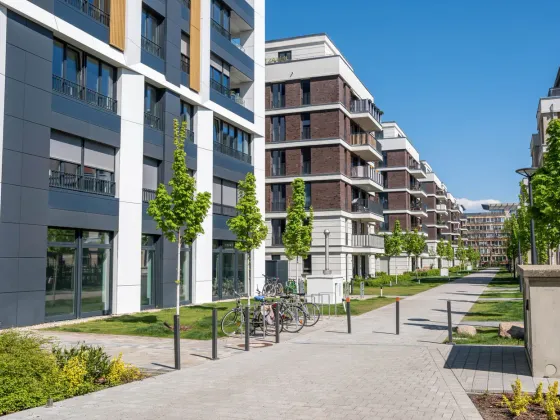
A good investment is not assessed only by its potential rent. It also matters how wide a range of buyers would be interested in the home years from now.
The key word here is liquidity.
A home with a standard floor area, a practical layout, a good location and normal running costs usually has a wider potential audience than an overly specific property.
With new construction, an advantage can be lower depreciation at the time of a future sale.
With older construction, the strong asset is often the address. If the supply of new homes in a specific established zone is limited, a well-maintained older property can remain competitive.
That is why the age of a building should be only one criterion, not the main argument for buying.
8When is new construction the more logical investment?
A new property may be more suitable if the investor:
- is looking for a longer investment horizon;
- wants to minimise the likelihood of major repairs immediately after purchase;
- has a budget for finishing when the home is not handed over fully ready;
- chooses a project in an area with good real prospects;
- values modern features in the building;
- can wait for completion when the purchase is made during construction.
With this approach, it is important not to buy based on visualisations and promises alone. The project, the developer, the documentation, the contract and the price compared with similar properties should be assessed as a whole.
9When can older construction be the better choice?
An existing property may have the advantage when:
- the location is proven to be in demand;
- the building is in good overall condition;
- the purchase price leaves enough budget for renovation;
- after renovation, the home can be positioned in a higher segment;
- the investor wants a property that can be prepared for letting relatively quickly;
- its features suit a wide group of tenants or buyers.
Here the biggest mistake is to buy a cheap home solely because of the low entry price. If the building has serious problems or the property has hard-to-overcome drawbacks, a low price does not always mean a good investment.
10Five questions to ask yourself before choosing
Instead of starting with “new or old?”, it is more useful to answer the following questions.
1. How much will the ready-to-use property actually cost me?
Add up the purchase, the transaction costs, the renovation, the finishing, the furnishing and the necessary reserve.
2. Who would rent or buy this property after me?
The more clearly you can define the potential customer, the easier it is to assess the investment.
3. What can't I change?
The kitchen can be replaced. The location, the floor, the orientation and the main structure of the building cannot.
4. What might the property be worth in a few years?
You do not need to forecast a specific price. It is more important to judge whether its features are likely to stay in demand.
5. Is there a better alternative for the same total budget?
This is one of the most important investment questions. Do not compare an apartment at €150,000 with another at €170,000 if the first will require another €25,000 for renovation and preparation.
11How to compare two specific offers?
The most practical thing is to make your own comparison table.
For each property, record:
- the final price after renovation or finishing;
- floor area and functionality;
- condition of the building;
- location and infrastructure;
- parking options;
- expected running costs;
- potential for renting out;
- the potential pool of future buyers;
- the time needed until it is ready;
- main risks.
After such a comparison, it often turns out that the property that was initially “more expensive” is actually the better investment. In other cases, it is precisely the older home that offers a better combination of price and potential.
If you are only starting to compare offers, you can also browse the current properties for sale in Varna and compare different construction types, districts and price levels.
12Which is the better investment in 2026?
Neither new nor older construction wins automatically.
New construction is a strong choice when the project is of good quality, the location is right, the final price is sensible and the investor wants a longer-term asset with less initial depreciation.
Older construction can be an excellent investment when it offers a strong location, a sound and well-maintained building, a good entry price and a real opportunity to add value.
The more important question, therefore, is not “how old is the building?” but “what do I get for the total sum I will invest, and how attractive will this property remain to the next tenant or buyer?”
It is precisely this logic that protects the investor from decisions based only on labels such as “new”, “luxury”, “bargain” or “needs renovation”.
In an investment purchase, value comes from the combination of the right price, a quality property, a good location and real demand. When these factors are present, both new and older construction can be a sensible investment.
Comments
There are no comments yet. Be the first to share what you think about the article.