
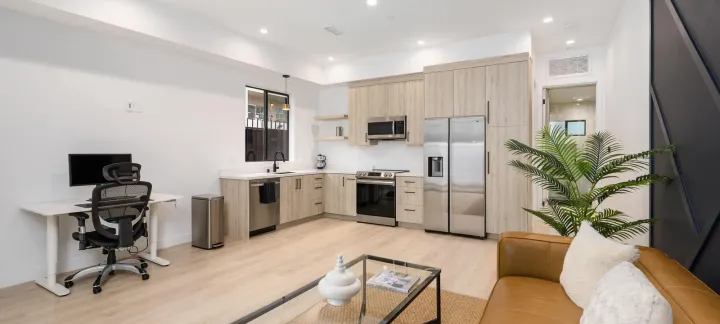
When you furnish your own home, you can follow your personal taste almost without limits. With a property bought to rent out, the logic is different. The interior must not only look good but also appeal to a wide enough range of people, be practical, easy to maintain and not require constant repairs.
This is exactly where many owners go wrong. They invest a significant sum in furnishings that reflect their personal preferences, only to find later that they are too specific for potential tenants.
The right interior for a rental apartment does not have to be expensive or designer. It is far more important that the space looks bright, tidy, functional and easy to take in right from the photos in the listing.
If you are still at the stage of choosing a home, the various properties for sale should be assessed also by how easily they can be furnished functionally, and not just by floor area and purchase price.
1The interior of a rental property is part of the investment
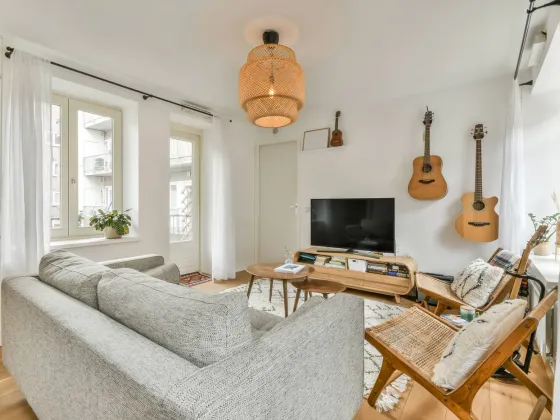
Furnishing is not simply the last step after the purchase. It is part of the overall investment strategy.
Two similar homes in the same area can attract completely different levels of interest if one looks bright, well kept and practical, while the other is cluttered, dark or visibly dated.
This does not mean you should invest in the most expensive furniture and materials. For a rental home, you need to strike a balance between:
- good visual presentation;
- materials that withstand everyday use;
- a sensible initial investment;
- easy replacement of individual pieces of furniture and elements;
- enough storage space;
- an interior suitable for more than one type of tenant.
How much it is worth spending also depends on the investment property itself, since the yield on a studio, a one-bedroom apartment and a house is affected by different costs, target tenants and rent levels.
2First decide who you are furnishing for
Before choosing a sofa, a kitchen or a wall colour, ask yourself a more important question: who is likely to live in this property?
The interior of a small studio near a university should not be planned the same way as the furnishing of a spacious two-bedroom apartment suited to a family.
A home for a student or young professional
In smaller apartments, practicality is especially important. The space needs to offer room for work, storage and daily activities without looking cluttered.
A good approach is to have:
- a compact workspace;
- enough sockets around the desk and the bed;
- a wardrobe with genuinely usable capacity;
- an easy-to-maintain kitchen;
- furniture that does not take up unnecessary space.
In this type of property, the decorative effect should come second to functionality.
An apartment for a couple
In a one-bedroom home, it is usually sensible to separate the areas for rest, dining and work clearly.
Many people work at least partly from home, so a small desk or a comfortable spot for a laptop can be more useful than an extra decorative cabinet.
It is just as important that the home has enough space for two people's belongings.
A home for a family
For a family property, the priorities change. Durable surfaces, storage space and a practical layout matter more here.
If the property is in an area favoured by families, the interior choices should work for that tenant profile. The area itself also matters, because Varna's districts differ in infrastructure, transport, surroundings and the profile of housing demand.
3Which interior style is best for letting?
For an investment property, the safest choice is usually not an extreme style but a balanced, contemporary interior.
The aim is for a prospective tenant to easily picture their own belongings and daily life in the home.
Contemporary minimalism
This is one of the most practical approaches for a rental property.
It is characterised by:
- clean lines;
- relatively neutral colours;
- a limited number of decorative elements;
- functional furniture;
- visually open space.
It is important not to let minimalism turn into an empty, impersonal interior. A home with only white walls, a grey sofa and a single lamp can look unfinished.
A few well-chosen accents can make the space noticeably more welcoming.
The Scandinavian approach
A Scandinavian interior suits many rental homes because it combines light tones, wood textures and relatively simple furniture.
There is no need to turn the apartment into a themed interior. It is enough to use characteristic principles such as natural light, light wood, textiles and clean shapes.
This approach works especially well in smaller homes, where dark furniture and overly heavy decoration can visually shrink the space.
Contemporary neutral style
For most investment homes, this is perhaps the most flexible option.
The combination of warm white, beige, light grey, wood tones and a few dark accents lets the apartment look modern without being overly distinctive.
This way, when trends change, a complete refurnishing is not needed.
4Neutral does not mean boring
One common mistake is the idea that a universal interior must be entirely white or grey.
In fact, an overly sterile space can look cold and cheap, even when the furniture used is not.
A better result comes from combining calm base colours with a few controlled accents.
For example, you can use:
- light walls and a wooden floor;
- a sofa in beige or grey;
- black or graphite light fittings;
- curtains with a light texture;
- one more distinctive chair, rug or decorative painting.
The advantage is that, if necessary, the accents can be changed easily without renovating the whole apartment.
5Choose furniture by use, not just by the photo
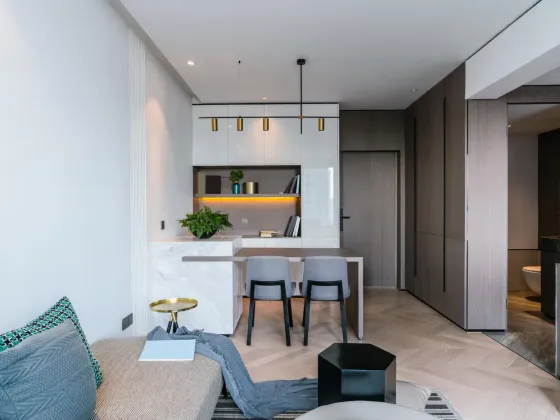
Beautiful furniture is not always good furniture for a rental home.
A sofa in delicate light damask may look wonderful in the first photo shoot but be hard to keep clean. A table with a sensitive surface can quickly lose its good looks. A cheap wardrobe with flimsy mechanisms may need repair after relatively little use.
It is more practical to look for:
Easy-to-Clean Surfaces
Flooring, kitchen worktops and furniture should allow for normal everyday use without special maintenance.
Standard Sizes
Furniture and appliances in standard sizes are usually easier to replace. If every part of the interior is custom-made, a future renovation can become unnecessarily complicated and expensive.
Quality Where the Load Is Greatest
Not every piece of decorative furniture needs to be high-end. There are, however, items that are used every day, and saving on them is often a false economy.
These include, for example:
- the mattress;
- the sofa;
- the kitchen cabinet mechanisms;
- the taps;
- the dining chairs;
- the wardrobe mechanisms.
6The Kitchen Matters More Than the Decor
In a furnished rental apartment, the kitchen is one of the elements that most quickly shapes the impression of the home’s quality.
It does not have to be luxurious. It does, however, have to be finished, practical and in good condition.
For most long-term tenants, what matters is enough worktop space, reasonable storage and the basic appliances.
A small but well-organised kitchenette can be more functional than a large kitchen with an awkward layout.
7Don’t Underestimate Storage Space
When preparing a property for photos, people often think mainly about open space. The person who will live in the home, however, has clothes, shoes, suitcases, household items and many everyday belongings.
Insufficient storage can make an otherwise beautiful apartment inconvenient for long-term living.
Particularly useful are:
- a floor-to-ceiling wardrobe;
- a shoe cabinet in the hallway;
- a spot for the vacuum cleaner and cleaning supplies;
- kitchen cabinets with efficiently used interior space;
- a bed with storage in a small apartment.
These solutions are not the most impressive part of an interior photo, but they can significantly improve everyday functionality.
8Lighting Can Change the Feel of the Whole Apartment
A single central light in each room is rarely enough for a pleasant interior.
It is good to have different levels of lighting: general, task and accent.
In the living room, for example, general lighting can be combined with a lamp by the sofa. In the kitchen, task lighting above the worktop is useful, and by the bed, accessible reading light.
Choose light fittings with a simple design, for which standard consumables and spare parts can easily be found.
9The Bathroom Should Look Clean and Hold Up Over Time
In the bathroom, overly specific trends can quickly start to look dated.
The safer option is a fairly neutral base and quality workmanship.
Priority should go to:
- good waterproofing;
- easy-to-clean surfaces;
- reasonable space for toiletries;
- enough lighting;
- good ventilation;
- easily replaceable taps and accessories.
Beautiful design cannot make up for functional problems such as lack of space, constant retention of moisture or an awkward layout.
10Which Interior Choices Are Better Avoided?
Some choices can look striking on social media but are riskier in a rental property.
Be careful with:
- overly dark walls throughout the apartment;
- bright colours in every room;
- furniture with unusual shapes;
- too many open shelves;
- delicate materials that are easily damaged;
- too many decorative objects;
- a strongly themed design;
- expensive designer pieces with no practical value.
The owner should think not only about how the home looks immediately after furnishing, but how it will look after several years of normal use.
11Don’t Over-Furnish
Clutter is the other extreme.
Not every free corner needs a small table, cabinet, plant or decorative object. In small homes especially, this can visually shrink the space and create a sense of chaos.
Leave some freedom for the future tenant.
They will probably have their own belongings and need somewhere to put them.
It is therefore better for the home to have the necessary quality furnishings than a large number of cheap pieces.
12Match the Budget to the Real Rent
One of the most serious investment mistakes is over-furnishing for the segment the property sits in.
If homes of similar size and features in the area are rented within a certain price range, a very expensive kitchen or a designer sofa will not automatically allow a noticeably higher rent.
The interior budget should therefore be matched to the overall investment calculation.
When buying for investment, it is important to compare the purchase price, furnishing costs, expected rent and void periods, because these are the figures that determine whether the deal is a good investment in real financial terms.
13The Interior Should Help the Listing Too
When renting out, the first encounter with a property very often happens through the photos.
This means the interior must look good not only in person but also on camera.
What works well for photos:
- clear, tidy surfaces;
- enough natural light;
- harmonious colours between rooms;
- a minimum of personal belongings;
- a clear function for each zone;
- clean windows, mirrors and textiles.
The home does not need to look like a hotel room. The person browsing the listing needs to quickly understand the space and picture their daily life there.
Applicants who like the property and reach a viewing should then be assessed not just on first impressions, but on clear criteria when choosing a reliable tenant.
14Should You Follow Interior Trends?
In moderation.
Trends can be useful for refreshing a home, but it is not a good idea for the whole concept to depend on a fashionable colour or style that may quickly go out of date.
A more durable strategy is to keep the main elements fairly neutral and let trends appear in things that are easy to change:
- decorative cushions;
- lamps;
- small tables;
- pictures;
- textiles;
- chairs or individual accent pieces.
That way the home can be updated without a major renovation.
15When Is It Worth Investing More in the Interior?
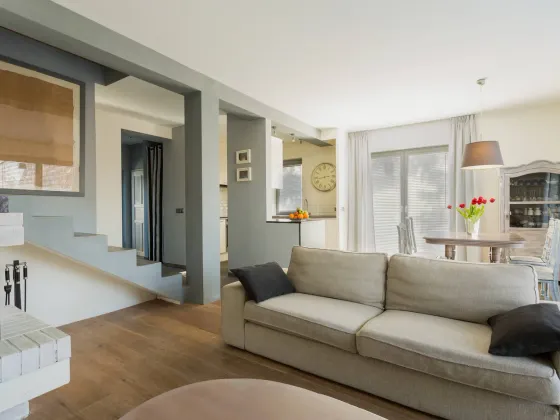
A higher budget makes sense when the property and the area allow positioning in a higher segment.
A spacious apartment in a good location, with a quality building and suitable features, can justify a higher class of furnishings.
The opposite is also true. With a budget property, an interior that is too expensive can increase the amount invested without the market making up the difference through higher rent.
That is why, before renovating, it is worth looking at real homes for rent with a similar area and location and judging what standard the competition offers.
16A practical formula for furnishing an investment property
If we had to boil the whole approach down to a few basic rules, they are fairly simple.
Choose:
- a neutral, warm colour base;
- practical furniture in standard sizes;
- enough storage space;
- durable materials;
- good lighting;
- a limited number of easily replaceable accents;
- appliances suited to normal everyday use.
Avoid extremes and do not turn the property into a showcase of your personal taste.
17The interior must work for the investment
For a rental property, the best interior is not the one that gets the most attention in itself. The best is the one that helps the home be perceived as comfortable, well kept and suited to real life.
A well-chosen style can widen the pool of potential tenants, make the listing more attractive and reduce the need for expensive changes every time the occupants change.
So invest mainly in the things that are hard to replace – a functional kitchen, quality flooring, bathroom, lighting and enough storage space. Colours, textiles and decor can stay more flexible.
When the interior is planned as part of the investment, rather than as a personal design project, the home has a much better chance of remaining practical and appealing to different tenants over time.
Comments
There are no comments yet. Be the first to share what you think about the article.