

Proximity to a school or kindergarten is among the most important criteria when buying a family home. At first glance the task seems easy – you find a suitable school on the map and look for an apartment in the same neighbourhood. In practice, however, the distance stated in the listing does not always match the real time the family will spend every day.
Between the home and the school there may be a busy boulevard, an awkward junction, a steep stretch, a missing pavement or a route that looks short only by car. The kindergarten may be a few minutes away on foot, but admission may depend on current rules, ranking and available places. That is why a good choice is based not only on proximity on the map, but on the overall organisation of family daily life.
When looking for a home near a school in Varna, you should compare not only the neighbourhoods but also the specific streets, the walking routes, the traffic at different times, the parking options and access to other services. A well-chosen address can save the family hundreds of hours of travelling in the years ahead.
1Start from the family's real needs
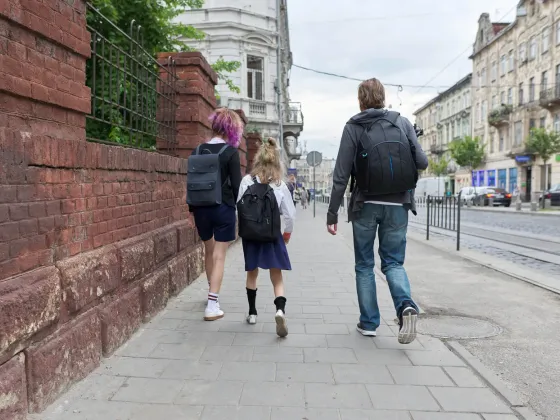
Before browsing listings, define what exactly “close” means in your case. For a family with a child in a nursery or first group, the distance should be convenient for getting there with a pushchair, on foot or by car even in bad weather. For older pupils, a safe independent route and convenient city transport become important.
Write down your main daily commitments:
- school, kindergarten or nursery;
- the parents' workplaces;
- after-school care, sports or language courses;
- a medical centre or family doctor;
- help from relatives;
- places for shopping and leisure.
The home may be close to the chosen school, but if one parent then has to cross the whole city, the daily schedule will again be heavy. It is more practical to look for a location that connects several important points, rather than focusing on a single building.
It is also good to think long term. The child may move from kindergarten to school, start a sport or travel independently. A suitable family home should remain convenient after a few years, not only for the current schedule.
2Do not rely only on the distance in the listing
Phrases like “five minutes from school” or “right next to a kindergarten” are approximate. They do not always specify whether the distance was measured on foot, by car or in a straight line.
Check the exact route yourself. A distance of 500 metres may be pleasant and safe to walk, but it may also involve:
- crossing several busy streets;
- stairs or a steep slope;
- narrow and broken pavements;
- cars parked on the pedestrian area;
- a poorly lit stretch;
- detours around fences and closed entrances.
In Varna, the terrain and street network can significantly change the sense of proximity. Two points that look close on a map are not always connected by a convenient walking route. That is why it is important to walk the distance in person and not just look at it online.
Measure the time, not just the metres
For everyday life, the question “How long will it take us?” matters more than “How many metres is it?”. Check the route at times close to the start and end of the school day.
The same road can take five minutes on a day off and more than twenty minutes in morning traffic. If you plan to take your child by car, account for the time to get out of the neighbourhood, waiting at junctions, finding a place to stop and getting back onto the main route.
Do at least three practical checks:
- in the morning between 7:30 and 9:00;
- in the afternoon when classes finish;
- on a day with heavier traffic or bad weather.
This will give you a more realistic picture than the standard viewing of the home in calm conditions.
3Check the admission conditions in advance
Proximity to a particular kindergarten or school does not automatically mean the child will be admitted there. Admission to municipal kindergartens and preparatory groups in Varna is organised through an electronic system and current rules that set out the conditions, deadlines and required documents. Varna Municipality publishes separate information on admission to nurseries, kindergartens and first grade.
Before buying, check:
- what the current ranking criteria are;
- whether the permanent or current address matters;
- how long the address must have been registered;
- which administrative district the home belongs to;
- how many buildings or branches the chosen kindergarten has;
- what the options are if there are no free places.
The rules can change, so do not rely on information from acquaintances whose children applied several years ago. Check the current requirements in the official system at the time of application.
When buying a home with the aim of changing your address, you should also allow for the administrative time needed to register the new address. Do not pay a higher price for a property just because of its proximity to a particular institution before you have checked whether the address actually gives you an advantage and whether there is a reasonable likelihood of admission.
4Look at more than one educational institution
A family's choice should not depend entirely on a single school or kindergarten. The head, the rules, the available places, the organisation and the child's preferences can change.
A location that offers several options within a reasonable radius is safer. Check whether the area has:
- more than one municipal kindergarten;
- schools with different profiles;
- private education centres;
- after-school clubs and language schools;
- sports facilities and playgrounds;
- convenient transport to other districts.
This way the family will not be forced to change homes or travel across the city every day if the initial choice turns out to be unsuitable.
The Regional Education Department in Varna maintains information and registers on the schools and kindergartens in the region, which can be used as a starting point for research.
5Assess the safety of the walking route

For a small child, proximity only makes sense when the route is convenient and safe. It is not enough for the school entrance to be visible from the block if there is a busy road between them with no suitable crossing.
Walk the whole route and pay attention to:
- the presence and width of pavements;
- pedestrian crossings and traffic lights;
- visibility when crossing;
- street lighting;
- traffic around the school entrance;
- cars that stop on pavements;
- abandoned or poorly lit stretches;
- construction sites and temporary traffic changes.
Check whether the child could walk the route alone in a few years. This is an important indicator of the address’s long-term practicality.
For a home in a gated complex or on an inner street, find out how you get out to the main pedestrian route. Sometimes the quiet setting around the building itself is separated from the school by a major boulevard or an awkward underpass.
6Check traffic and parking around the school
Areas around popular schools and kindergartens are often very busy at the start and end of the school day. This can affect not only journey time but also noise, access to the garage and the possibility of parking near the home.
During a viewing, check:
- whether queues form in front of the building;
- whether entrances and garages get blocked;
- whether there are one-way streets;
- whether short stops are allowed;
- how public transport runs;
- whether there is a risk of the street being obstructed in bad weather.
If the apartment is right next to a school yard, visit it during break time or sports activities. The noise may be acceptable to one family and a serious drawback for another, especially for low-floor homes.
Proximity is an advantage, but the most practical position is not always directly opposite the entrance. A five- to ten-minute walk along a safe inner street often offers a better balance between convenience, noise and traffic.
7Compare different types of areas in Varna
When choosing around a school or kindergarten, you should compare specific micro-districts and streets, not just the names of neighbourhoods.
Central and established parts of the city
The Centre, Chataldzha, Chayka and parts of Levski offer access to established infrastructure and a variety of services. In some zones, a child can walk to school, after-school care or sport.
The possible drawbacks are:
- higher property prices;
- limited parking;
- heavy traffic;
- noisy streets;
- older buildings in varying condition.
In these areas it is important to assess the specific street. A difference of a few hundred metres can mean a significantly calmer environment.
Large residential districts
Mladost, Troshevo, Vazrazhdane and Vladislav Varnenchik have schools, kindergartens, shops, transport and large open spaces between buildings in different parts of the districts.
Their possible advantages are:
- more services within the neighbourhood;
- a mix of older and new construction;
- larger spaces between buildings;
- parks and sports areas;
- a choice between different price levels.
However, distances within the neighbourhood itself can be considerable. A listing labelled “Mladost” or “Vazrazhdane” is not enough – check the exact address against the specific school or kindergarten.
Outlying and lower-density areas
Vinitsa, Trakata, Galata and other more distant parts can offer peace and quiet, more space and a lower building density. For families looking for a quieter environment, this can be a strong advantage.
However, the following need to be checked carefully:
- the frequency of public transport;
- the condition of the streets and pavements;
- the possibility of getting around without a car;
- travel time to school at busy hours;
- access in winter and in heavy rain;
- the availability of backup education options.
In such locations, dependence on a car may remain high even when a kindergarten appears nearby on the map.
8Look at the surroundings of the home too
The school is not the only important point in a child's daily routine. After lessons end, the family needs places to play, do sport, take a walk and shop.
Within a radius of about ten to fifteen minutes on foot, look for:
- a safe playground;
- a park or green space;
- a pharmacy and a medical practice;
- grocery shops;
- a sports centre;
- after-school care or a language school;
- convenient stops;
- places for short-term parking.
Do not automatically assume that proximity to a school makes the area suitable for a family. The home may be next to the school but far from all the other services.
For a more general comparison of family-friendly settings, you can also use the article on suitable neighbourhoods for families in Varna. The actual choice, however, must be made at the level of the specific building and route.
9Do not neglect the qualities of the home itself
A good location cannot fully make up for an unsuitable layout, a small area or serious technical defects. Families sometimes compromise too much on the apartment because it is next to the desired school.
Check whether the home has:
- a sufficient number of separate rooms;
- space for studying and storage;
- decent daylight;
- a safe balcony;
- a convenient lift;
- room for a pushchair or bicycles;
- good sound insulation;
- easy access to the entrance;
- suitable heating and reasonable running costs.
Think about what family life will look like in five or ten years. A small one-bedroom apartment may be enough for now but may force another move when the child needs a separate room.
10Visit the area several times

A single viewing is not enough when location is the main motive for the purchase. Visit the area on different days and at different times.
It is most useful to observe:
- on a weekday morning;
- at the end of the school day;
- in the evening after 19:00;
- on a day off;
- in the rain or heavy traffic.
Talk to people living in the neighbouring blocks. They can give you practical information about parking, noise, problem junctions, public transport and the actual travel time.
Check the future development of the area as well. New buildings, large construction projects or changes to traffic arrangements can affect present-day convenience.
11Practical checklist before deciding
Before you make an offer or pay a deposit, confirm the following:
- The chosen school or kindergarten is suitable for the child.
- You have checked the current admission conditions.
- The property's address falls within the right catchment area under the current rules.
- There is at least one realistic alternative if no place is available.
- You have walked the route.
- You have checked the traffic during school hours.
- The route is safe and well lit.
- There is convenient city transport.
- The home is not exposed to excessive noise.
- The area offers parks, shops and medical services.
- The apartment itself meets the family's long-term needs.
- The price is not unjustifiably inflated just because of the advertising phrase “near the school”.
When viewing with a professional real estate agent, ask to be shown not only the home and the building, but also the real routes to the points that matter to the family.
12Choose an address that makes the whole day easier
A suitable home near a school or kindergarten is not necessarily the closest in a straight line. The better choice is the address that offers a safe route, a reasonable travel time, alternative schools and convenient access to the other everyday services.
In Varna, the differences between individual streets can matter more than the differences between neighbourhoods. So check the specific route, the traffic, the terrain and the surroundings of the building. When the choice is made according to the real family schedule, proximity to a school becomes a long-term convenience, rather than just a nice-sounding phrase from the listing.
Comments
There are no comments yet. Be the first to share what you think about the article.