

Buying your first property is one of those moments when you realise how many “small” decisions actually matter. It is not only about whether the home is beautiful, whether the kitchen has the right shape or whether you like the view.
It is about a process that involves a budget, checking documents, proper negotiation, a realistic assessment of risks and calm organisation of the next steps. In 2026 buyers are better informed than ever, but also more easily misled by “perfect listings”, unclear terms or hasty compromises. The truth is simple: when you have a structure, the purchase goes smoothly; when you do not, chaos begins.
This guide is written to take you through the whole journey: from the first idea and setting a budget, through viewings and negotiations, to the documents, the final deal and the costs that come right after it.
If you are at the start of your search, begin with the logic and the criteria. If you are already viewing properties, go straight to the checks and contracts. And if you are hesitating over whether to buy with a loan – focus on preparation before the bank.
1How to start properly, even before the first viewing
The most common mistake of first-time buyers is to start with the listings. You scroll, you like, you call, you view, you get confused… and after 10 viewings you are no closer to a decision, just more tired. A better start is the opposite: first a framework, then the search.
Start with three clear questions:
- First: are you buying a home to live in or a property as an investment.
- Second: how long you plan to stay in this property.
- Third: which compromises are acceptable and which are not.
When you answer honestly, the search becomes shorter and more accurate.
A practical approach is to phrase your criteria as testable conditions. “I want it to be quiet” can be checked in the evening and on a weekday. “I want it to be close to a school/kindergarten” can be checked by time and route. “I want decent parking” is easiest to check after 18:30.
Location: the neighbourhood is more than a map
The neighbourhood is everyday life. The same floor area in different districts can mean two completely different lives: different traffic, different amenities, different quiet and a different outlook for value over time.
That is why, with a first purchase, it is sensible to limit your choice to 2–3 areas and really “test” them – with routes in the morning and evening, a check on parking and a feel for the surroundings by the entrance.
Property type: new construction or resale
There is no universally right answer. New construction often gives better energy efficiency, more modern common areas and the chance to shape the home “to your taste”. The resale market can offer more established infrastructure, more realistic areas and a ready home that does not require waiting.
2The budget: the price of the property is not the whole cost
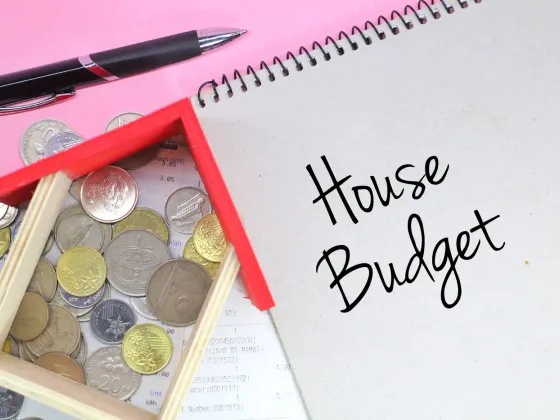
When you buy for the first time, the budget is where it is easiest to make a mistake. The reason is that many people think of the budget as a “maximum price”, not as the overall picture: initial funds, transaction costs, potential renovations, furnishing, a reserve and peace of mind.
In practice, a budget works best when you split it into three layers: “I can pay”, “I can sustain”, “I can bear when something unexpected happens”.
- The first is the price and initial costs.
- The second is monthly comfort – mortgage, building fees, bills, parking space, insurance.
- The third is the reserve – because with a first purchase unforeseen things often appear: renovation, appliances, replacing windows, extra documents, fees, notary clarifications.
Buying with a mortgage: prepare before you fall for a property
The calmest scenario is to have clarity in advance about your options: an indicative loan amount, the expected instalment and terms that are realistic for you. That way viewings are targeted and you will not waste time on homes that look good but are beyond your real limits.
3The viewing as a check, not an emotion
A viewing is not just about seeing whether you like it. It is a check: layout, light, noise, entrance, neighbours, parking, building maintenance, real floor areas, renovation potential, damp, orientation.
First-time buyers often judge a property by its furniture and interior, but that is the easiest thing to change. What is hard to change is the location, the building, the entrance and problems that cannot be seen in a photo.
Before the viewing, write down 8–10 “red lines” that you will not negotiate with yourself. For example: minimum light in the living room, a normal bedroom width, no constant noise, reasonable common areas, a functional bathroom, the possibility of parking. When you are clear, the viewing becomes quicker and more honest.
How to recognise a misleading listing and unrealistic promises

On a first purchase, the most dangerous thing is to believe phrasing that sounds good but means nothing: “unique”, “luxury”, “perfect”, “no flaws”. Ask for specifics: documents, year of construction, status, real floor area, common areas, maintenance fee, any encumbrances, deadlines for new construction.
4Documents and checks: the area where beginners most often lose time and money
Buying a property is a legal transaction. This means you are not buying an “apartment” but rights over an apartment. And here the rule is simple: whatever is not proven by documents does not exist. The earlier you start the checks, the fewer nerves you will have at the end.
Here is what it is sensible to check before you get to signing a preliminary contract or paying a deposit, especially if you are buying for the first time:
- Ownership document and a clear chain of title (who is selling and on what basis)
- No encumbrances or distraint orders, and clarity about mortgages or other restrictions
- Exact identification of the property in the cadastre and consistency between the documents and the real condition
- If it is new construction: stage of construction, permits, contracts, deadlines and commitments for completion
- If it is the resale market: any illegal alterations, common parts, shares of common parts, entrance and neighbouring properties
- Utility obligations, if there are any special features, and clarity about fees to the homeowners' association
This is the basic minimum that makes the purchase “manageable”. Depending on the specific property there may be additional checks, but the logic stays the same: security first, negotiation after.
5Preliminary contract, deposit and negotiation: how not to fool yourself
First-time buyers are often nervous about negotiating because they are afraid of “missing out on the property”. But negotiation is not war – it is a way to clarify the terms and make the deal fair and workable. There is a huge difference between “I like the property” and “the property has been checked and the terms are clear”.
Deposit: when it makes sense and when it is premature
A deposit makes sense when it is clear what you get in return: the property held for a specific period, fixed terms, clarity about the documents and the steps up to the deal.
If a deposit is paid “so that no one else takes it”, but without a framework, you risk buying the seller time rather than security for yourself. Always look for clarity in writing: deadlines, terms for refund, and what happens if you withdraw because of documents or a loan.
The preliminary contract: the most important document before the notary
The preliminary contract is where the deal is fixed in detail. Price, deadline, conditions, penalties, which documents are provided, when the property is vacated, what remains as furnishings, how costs are borne.
This is the point at which “I found a home” turns into “I have a plan to acquire it”. If you are buying new construction, the preliminary contract is usually even more crucial, because it covers stages, deadlines, completion and standards.
To plan the completion of new construction realistically, it also helps to understand the differences between the levels of completion.
6Transaction costs: what you pay besides the price
One reason a first purchase is stressful is that the costs arrive all at once. That is why it is important to know the picture in advance. When you plan, it will be easier to make a sensible offer and avoid a situation where the property is “the one” but you lack the funds for the final fees.
The most common purchase costs include local tax, registration fee and notary fees, as well as additional costs depending on the specific deal.
Here are the items it is sensible to include in your plan so they do not catch you by surprise at the end:
- Local acquisition tax, registration fee and notary fees according to the value of the deal
- Fees for documents, certificates and administrative services during preparation
- Loan costs, if you are buying with a mortgage: valuation, bank fees and insurance according to the specific terms
- Intermediary commission, if you work with an agency and the service is included under agreed terms
- Initial costs after the deal: transferring utility accounts, minor repairs, furnishing and appliances
This framework keeps you grounded. The real benefit is not to “count down to the last cent”, but to avoid a scenario in which you buy at your maximum and then have no breathing room for a normal start.
7New construction: what to watch for if you buy “off plan” or under construction
Buying in a new development can be an excellent choice for a first home, but it requires more discipline with regard to documents and deadlines. It is important to know exactly what you are buying at the given stage, what guarantees you have, how payment works and what happens in case of delay. The key is to read the contract not just as a price, but as a commitment: who, what, when and under what conditions.
8Resale market: how to buy a “ready” home with peace of mind

With ready-built homes the advantage is that you see reality: the entrance, neighbours, noise, light, condition. But there are traps too: makeshift renovations, hidden problems (damp, installations), a mismatch between actual use and the description in the documents, unclear arrangements about furniture and vacating the property. That is why, on the resale market, it is important to ask specific questions and not to accept “I was told” as proof.
A useful discipline is to clarify right at the start how the home will be vacated, what stays inside and when possession is handed over. This reduces conflicts and removes the most common source of tension after the notary.
9The agent's role: the difference between “showing” and managing a process
Many people associate the agent only with viewings. In reality, the value lies in managing the process: properly filtering offers, coordinating between seller and buyer, organising documents, accompanying you in negotiations, and synchronising with the bank and the notary.
With a first purchase this is especially important, because you have no experience and can easily miss a detail that later costs time and money.
10Final check before the notary and the first weeks after the deal
The last days before the deal are a moment when you must not rush. Documents, payments, the bank (if there is a loan), final checks and organisational details are all synchronised. After signing come the practical things: utility accounts, insurance, a renovation plan, furnishing, the entrance and the homeowners' association. The better the final stage is planned, the calmer the start in the new home.
If you feel you are getting lost in listings, return to the framework and the criteria. If you are in active viewings – return to the checks and documents. If you are at the final stage – fix the terms in the preliminary contract and clear up the details before the notary. The first purchase is not a test of luck, but a test of process.
Comments
There are no comments yet. Be the first to share what you think about the article.