

When viewing a home, attention naturally goes to the apartment – the layout, the light, the view, the renovation and the furnishing. However, some of the most serious future costs may relate not to the home but to the building it is in.
The roof, the façade, the vertical risers, the shared electrical installations, the lift and the condition of the common areas are a shared responsibility of the owners. If any of these elements is badly worn or needs major repair, the new owner may, fairly soon after the purchase, have to share costs they did not anticipate.
That is why, when choosing between different properties for sale, it is sensible to assess not only the specific apartment but the whole building as part of the purchase.
1Why is the condition of the building so important?
An apartment can be renovated. Flooring, kitchen, windows, sanitaryware and furnishings can all be replaced. The condition of the whole building, however, depends on many more factors and usually cannot be changed by a single owner on their own.
A well-maintained building creates a more predictable living environment and a better impression on a future sale or letting.
Conversely, neglected common areas, chronic leaks, a faulty lift or postponed repairs can become a permanent problem, no matter how well the apartment has been renovated.
When inspecting, pay attention mainly to:
- the structure and visible signs of problems;
- the roof and the façade;
- the plumbing and electrical installations;
- the condition of the lift;
- the cellars and underground levels;
- the entrance and the stairwells;
- how the building is managed and maintained.
2Start the viewing before you enter the building

A lot of information can be gathered just from the outward appearance of the building.
Look at the façade from different sides, as far as access allows. The point is not to make a technical diagnosis from appearance alone, but to notice signs that deserve further checking.
Such signs can include:
- clearly visible cracks;
- falling or badly damaged plaster;
- traces of long-term leaks;
- poorly executed local repairs;
- corroded metal elements;
- problematic balconies or railings;
- lasting traces of damp at the plinth.
A crack on its own does not necessarily mean a structural problem. Its cause and significance can be reliably determined by a suitable specialist.
If something about the building worries you, it is wiser to ask for a professional technical assessment than to draw conclusions yourself.
3What to look at in the building's structure
The structure is among the most important elements, but also among those that a buyer without technical training finds hardest to assess alone.
In an ordinary viewing, the aim is to look for signs of a potential problem, not to determine its cause.
Cracks
Look at the walls and ceilings of the common areas, the stairwells, the cellars and the places around the entrance areas.
Particular attention should go to large cracks, cracks that continue across different surfaces, or cracks that are visibly changing.
Fine surface cracking in the plaster can be of a completely different nature, so it is not right to take every crack as evidence of a structural problem.
Signs of unauthorised alterations
In older buildings, individual owners sometimes carried out conversions over the years.
If you notice unusually removed walls, enclosed common spaces, changes to the facade or other major interventions, ask what was done and whether the necessary documents exist.
The condition of the building itself is one of the reasons why, when buying a property for the first time, you should not judge the home solely by the renovation, the furnishings and the first impression.
4The roof can mean a serious future expense
The roof is often out of the buyer's sight, especially when the apartment is not on the top floor.
That does not mean its condition is irrelevant to you.
If there is a problem with the common roof, the consequences can affect the building and require a decision from the homeowners' association.
Ask:
- when the last major repair was done;
- whether any leaks have been recorded;
- whether waterproofing has been done;
- whether a repair is planned;
- whether funds have been collected for such work.
If you are buying a home on the top floor, the check is even more important. Look carefully at the ceilings and the upper parts of the external walls for old stains, colour changes, peeling or other signs of damp.
Do not rely only on fresh paint. Ask directly whether there have been leaks in the home or the common areas.
5The facade is not just a matter of appearance
A good facade matters both visually and functionally.
During the viewing, see whether there is peeling plaster, problems around balconies, damaged joints or areas that obviously need repair.
For buildings with external thermal insulation, check whether it looks intact and properly maintained.
Also bear in mind the various individual alterations to the facade. Many arbitrarily enclosed terraces, different glazing systems or untidy runs of external installations can hint at how the building has been managed over the years.
6Check the vertical plumbing risers
One of the important questions in an older building is the condition of the shared water supply and sewage risers.
A renovated apartment does not necessarily mean renewed common installations.
Ask the owner, the agent or a representative of the homeowners' association:
- whether the risers have been replaced;
- whether the replacement was done for the whole entrance or only in individual apartments;
- whether there are frequent leaks;
- whether there have been problems with the sewage;
- whether a future replacement is planned.
In the cellars and around the vertical runs, look for signs of leaks, corrosion, damp and repeated local repairs.
Within the apartment itself you can check the water and pressure, but that is different from assessing the condition of the shared building installation.
7What to check in the electrical system
In older buildings, it helps to find out whether the shared electrical infrastructure has been renewed.
Look at the panels in the common areas, the visible condition of the cable runs and the lighting in the entrance.
Do not open panels or carry out checks on the electrical installation yourself if you lack the necessary qualifications.
The more important questions are:
- whether the shared electrical system has been renewed;
- whether there are known problems;
- whether the lighting on the floors is sufficient;
- whether there is working emergency or automatic lighting, where applicable;
- whether significant repairs have been carried out in recent years.
If you have serious doubts, an electrician can give a far more reliable assessment than a visual inspection.
8The lift should not be left until last
On a high floor, the condition of the lift directly affects the everyday use of the property.
During the viewing, check whether it works normally, whether it stops exactly level with the floor, what the car looks like and whether there is visible maintenance information.
Also ask:
- how often it breaks down;
- when a more serious repair or modernisation was last carried out;
- whether there is a service contract;
- whether a repair is expected for which additional funds will have to be collected.
For a buyer on the first or second floor, this factor may seem secondary, but when you come to sell, the condition of the lift remains part of the overall impression of the building.
9Damp in the cellars can tell you something important
If you can access a cellar, an underground level or garages, take the time to see them.
Pay attention to:
- the smell of persistent damp;
- water on the floor;
- signs of leaks on the ceilings;
- mould;
- corroded pipes;
- damaged walls;
- problems around drainage.
A one-off mark is not enough for a firm conclusion, but systematic damp deserves further clarification.
This is especially important for basement rooms and underground garages, where water and drainage problems can be unpleasant and hard to solve.
10The common areas show how the building is managed
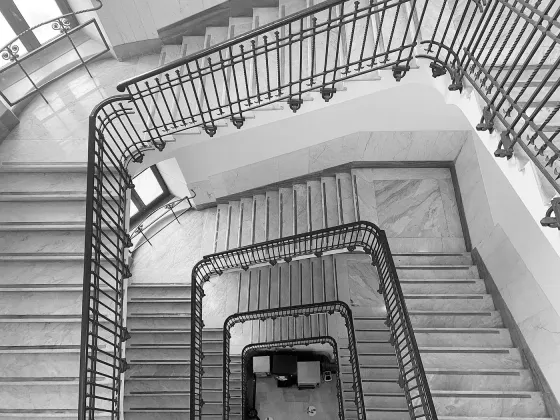
The entrance tells you much more about a building than it seems.
Expensive flooring is not the most important thing. More valuable signals are cleanliness, working lighting, the condition of the railings, the front door, the letterboxes and the absence of systematically accumulated damage.
Well-kept common areas usually show that the owners manage to organise at least the basic running of the building.
Look at:
- the entrance door and access control;
- the staircases;
- the lighting;
- the windows in the common areas;
- the railings;
- the walls and ceilings;
- the spaces around the lift;
- the area around the bins and the entrance.
If you are buying as an investment, these details matter too, because a future tenant or buyer sees the entrance before stepping into the apartment.
11Ask how the homeowners' association is really run
The physical condition of the building is only half of the check. The other half is how maintenance is organised.
Find out whether there is an acting manager or a professional building manager, and how decisions about repairs are made.
It helps to ask:
- what the monthly maintenance fee is;
- what it covers;
- whether there is a fund for future repairs;
- whether larger works are planned;
- whether there are significant unpaid debts to suppliers;
- whether funds are easy to collect when a repair is needed.
You do not need to pry into the personal relationships between all the neighbours. What matters is whether the building functions organisationally and whether the main problems are resolved on time.
12Check whether major repairs are coming up
This is one of the most useful questions before buying.
The building may look relatively good right now, but a decision may already have been made on:
- a roof repair;
- facade renovation;
- replacement of risers;
- lift modernisation;
- repair of the entrance;
- repair of garages or other common spaces.
Such a decision can mean an additional sum for each owner soon after the transaction.
So do not limit yourself to the question “How much is the entrance fee?” Also ask what larger costs are expected.
13New construction should also be checked
The fact that a building is new does not mean the technical check can be skipped.
With new construction, attention turns to other details – quality of workmanship, completion of the common areas, drainage, facade, garages, lifts and the functioning of the installations.
For a building under construction, it is also important to consider the specific construction stage. For example, the presence of Act 14 means the structure has reached the corresponding stage, but it does not mean that all installations, common areas and finishing work are complete.
That is why, when buying a new-construction property, the technical characteristics should be considered together with the degree of completion and the project specification.
And when the building is still going through the individual construction stages, the significance of Act 14, Act 15 and Act 16 should be clearly distinguished, because they do not certify the same degree of readiness.
14What is different with older construction
With older buildings you usually have one important advantage – you can see how the building has actually come through the years of use.
This lets you assess:
- how the common areas are maintained;
- what repairs have already been done;
- what is still to be replaced;
- whether there are chronic leaks;
- how the lift works;
- whether the entrance is actively managed.
But the age of the building also means the elements with a long service life need to be assessed more carefully.
In an old building, do not look only at whether the apartment has been “fully renovated”. A new kitchen and flooring have no bearing on the condition of the roof or the shared risers.
15Do not confuse the technical check with the legal one
These are two different parts of a safe purchase.
The technical check answers the question:
“What condition is the building in, and what costs or problems might arise?”
The legal check must establish the right of ownership, encumbrances, status and the other legal circumstances around the specific property.
One does not replace the other.
Even a technically excellent home is not a good purchase if it has unresolved legal problems, and in-order documents do not automatically mean the building is in good technical condition.
16When is it sensible to seek a technical specialist
It is not necessary to commission a detailed technical survey for every property. There are, however, situations where a professional inspection is a sensible extra protection.
For example, when:
- you notice serious or unusual cracks;
- there is persistent or widespread damp;
- the building is visibly poorly maintained;
- there are suspicions of structural interventions;
- it is an older property that requires significant investment;
- you receive contradictory information about repairs carried out;
- you are planning to buy a high-value home and want a more thorough check.
An engineer or another specialist with suitable qualifications can assess problems that cannot be determined reliably during an ordinary viewing.
17A practical checklist for viewing the building
Before you decide, go through the building with a specific list.
Outside
Check:
- the general condition of the facade;
- visible cracks and defects;
- balconies and railings;
- the plinth and signs of damp;
- the space around the building;
- the visible condition of the roof, where it can be observed.
In the common areas
Check:
- the entrance door;
- the lighting;
- the stairs and railings;
- the walls and ceilings;
- signs of leaks;
- the condition of the lift;
- visible shared installations.
On management
Ask:
- what the monthly fee is;
- who manages the building;
- whether there is a repair fund;
- what repairs have been done;
- what repairs are coming up;
- whether there are known problems with the roof, risers, lift or facade.
This list does not replace a professional technical assessment, but it helps you avoid missing obvious warning signs during a viewing.
18Do not let a nice apartment hide a bad building
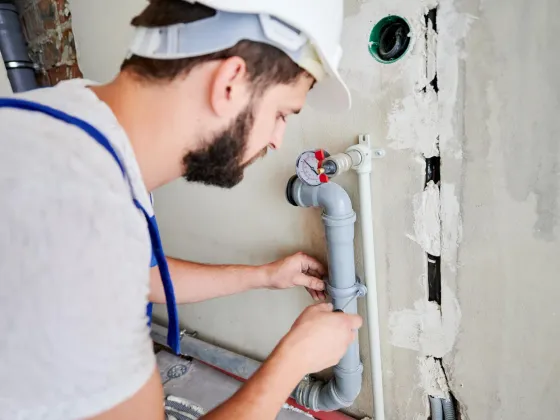
One of the easiest mistakes is to be impressed by a nicely renovated home and assume that everything else is secondary.
In fact the kitchen, paint and flooring are among the elements that can be changed relatively easily after the purchase.
The roof, the facade, the lift, the shared installations and the way the homeowners' association works are part of the environment you are buying together with the apartment.
That is exactly why, at a viewing, you shouldn't end your inspection at the front door of the home.
Look up at the roof, go down to the cellar, use the lift, look at the stairwell and ask specific questions about repairs.
19A good purchase starts with assessing the whole building
The condition of the apartment is only one part of the decision.
When you assess the structure, installations, roof, façade, lift and management of the common areas, you get a much more realistic idea of what you are buying and what future costs may arise.
You do not need to be a construction specialist yourself. What matters is knowing what to look for, what to ask and when a visible problem calls for a professional’s opinion.
That way, when comparing several homes, you will judge not only price, floor area and renovation but also the long-term environment in which the property sits.
And it is precisely this fuller check that can help you tell apart an apartment that simply looks good at a viewing from a property in a building that is reasonably maintained and suitable for long-term ownership.
Comments
There are no comments yet. Be the first to share what you think about the article.