
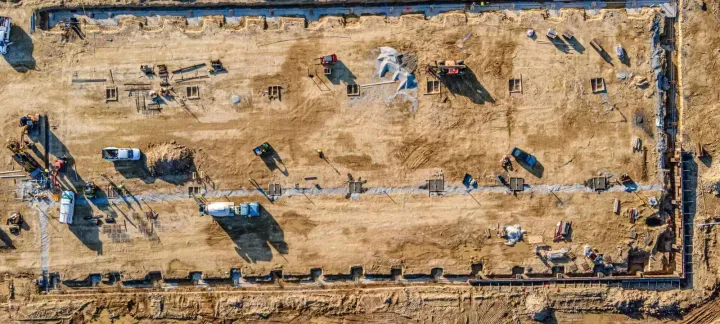
When looking at new-construction offers, you will almost inevitably come across phrases such as “the building has Act 14”, “pre-Act 15” or “Act 16 is expected”. They are used as a quick indicator of how far construction has progressed, but they do not mean the same thing and do not give the buyer the same level of certainty.
Each stage is tied to a different level of completion and different documents. Act 14 relates mainly to the acceptance of the structure. Act 15 certifies that construction is complete and is handed over by the builder to the client, but on its own it does not permit the building to be used. “Act 16”, in turn, is the colloquial term for the final commissioning of the building, even though, depending on the category of the building, the final administrative document may be a permit for use or a certificate of commissioning.
Understanding these differences matters because the stage affects the price, the risk of delay, the payment schedule, the options for a bank loan and the moment from which the home can be lawfully used.
1Why the construction stage matters to the buyer
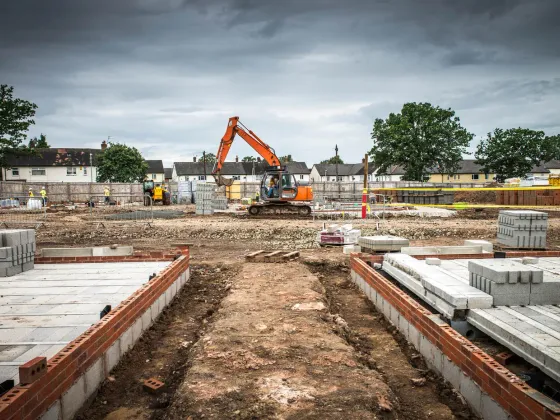
When buying off-plan, the buyer is not just assessing a future apartment. They are also taking on risk related to the completion of the building, the administrative procedures required and the delivery of the promised deadlines.
The earlier the stage, the more attractive the price tends to be and the wider the choice of apartments. At the same time, more construction work, payments and administrative steps remain before the building can be used.
The construction stage affects:
- the amount and schedule of payments;
- the possibility of final transfer of title;
- the terms of mortgage financing;
- the risk of changes to deadlines;
- the possibility of viewing the actual property;
- the moment the home is handed over;
- the possibility of lawfully moving in and using it.
It is important not to treat the label in an advertisement as sufficient proof. Ask for a copy of the specific document and check which building, stage or section it refers to.
2What Act 14 Is
Act 14 is the common name in practice for the act of acceptance of the structure. It is drawn up on a standard form under Ordinance No. 3 of 31 July 2003, which governs the acts and protocols issued during construction. The document certifies acceptance of the completed structure of the building.
At this stage the main structural elements are normally in place:
- foundations;
- load-bearing walls and columns;
- slabs;
- stairwell structures;
- the roof structure, as specified in the design;
- other structural elements of the building.
This does not mean the apartment is finished. Masonry, installations, windows and doors, the façade, lifts, plastering, screeds, common areas and finishing works may all still lie ahead.
What Act 14 Proves
Act 14 is an important construction milestone because it shows that the building has a completed and accepted structure. It does not, however, prove that:
- all construction and installation works are complete;
- the installations are finished and tested;
- the common areas are ready;
- the building can be lived in;
- the commissioning procedure has begun;
- there are no deviations or future delays.
That is why the phrase “the building has Act 14” should be understood as structural progress, not as readiness to move in.
Can You Buy an Apartment at Act 14?
Transactions can be concluded at this stage, but the exact subject of the transfer and the documents required depend on the structure of the project and the contract. In practice, once the rough construction is reached, the units can often be identified more clearly, but every transaction must be checked individually.
The buyer should establish:
- who owns the land;
- who holds the building right;
- whether there are mortgages on the land, the building or individual units;
- whether the specific apartment is described precisely enough;
- whether what has been built matches the approved design;
- what part of the price remains to be paid;
- what happens if construction is suspended or delayed.
Act 14 reduces some of the risk typical of a very early purchase, because the structure has already been built. It does not, however, remove the risk that the building will not be completed or commissioned within the promised timeframe.
3What Act 15 Is
Act 15 is the act certifying that the building is fit for acceptance. It is drawn up once the construction and installation works are complete, and through it the building and the construction documentation are handed over by the builder to the client. The document is the basis for the final report by the construction supervision and forms part of the preparation for putting the building into operation.
When it is drawn up, the work is checked against the approved designs, the contracts, the construction documents and the regulatory requirements.
What Is Recorded in Act 15
The document may record:
- the condition and completeness of the building;
- the execution of the structure and installations;
- the results of tests and measurements;
- the availability of the necessary construction documentation;
- works not carried out or poorly executed;
- defects that must be remedied;
- the opinions of the parties involved in construction.
Act 15 has a broader scope than a simple confirmation that the building looks finished. It is part of the official documentation that establishes that the building is ready to proceed to the final administrative procedure.
Does Act 15 Mean the Building Is Ready to Live In?
No. This is one of the most common misunderstandings.
Act 15 shows that the building has reached an advanced stage and has been found fit for acceptance. After it, however, the relevant commissioning procedure must still be carried out and the final administrative document issued.
In other words, a building may look completely finished, with doors, lifts and lighting installed, and still not be commissioned.
What to Check for a Property with Act 15
Ask for information about:
- the date the act was signed;
- the recorded remarks and unfinished works;
- the deadlines for resolving them;
- the readiness of the external connections;
- the necessary documents from the utility companies;
- whether an application for commissioning has been submitted;
- any problems with access, infrastructure or the common areas;
- what deadline for the final document is written into the contract.
The expression “close to Act 16” has no precisely fixed timeframe in itself. It may mean the documents are almost ready, but it may also conceal unmet conditions that will take months to resolve. So ask for concrete facts, not just a marketing description.
4What Act 16 Means
“Act 16” is a widely used but not always legally precise name. Strictly speaking, the Form 16 protocol relates to establishing fitness for use for buildings that go through a State Acceptance Commission.
The final document that allows the building to be used depends on its category:
- first, second and third category buildings are commissioned with an occupancy permit issued by DNSK (the National Construction Supervision Directorate);
- fourth and fifth category buildings are commissioned with a certificate issued by the authority that issued the building permit.
For many residential buildings, buyers and agents use the phrase “has Act 16” to say that the building has the final commissioning document. It is therefore more accurate to ask exactly which document has been issued, by which authority, on what date and for which part of the building.
What Commissioning Certifies
The final procedure aims to establish that the building can be used for its intended purpose and that the necessary documents have been submitted to show it is complete, compliant and safe.
For first to third category buildings, the occupancy permit is issued by DNSK on the basis of the construction supervision’s final report and the protocol of the State Acceptance Commission.
After commissioning, the building may lawfully be used for its intended purpose. This is the key difference from Act 15.
5The Key Differences Between the Three Stages
At Act 14
- the structure is accepted;
- the building is at the rough construction stage;
- significant work remains;
- it cannot be regarded as ready for use;
- the risk of changes to deadlines remains higher.
At Act 15
- the construction and installation works have reached a completed stage;
- the building is handed over by the builder to the client;
- remarks and unfinished works may be recorded;
- administrative commissioning is still to come;
- the building should still not be regarded as lawfully ready to live in.
After Commissioning
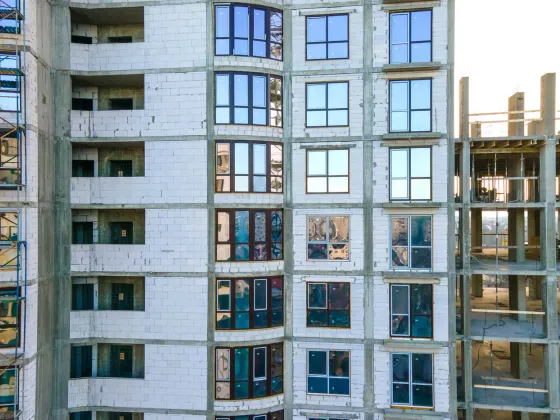
- the relevant final administrative document has been issued;
- the building can be used for its intended purpose;
- the risk linked to the completion itself is significantly lower;
- the actual condition of the common areas and the home can be checked more fully;
- moving in, renovating and renting out are easier to plan.
6How the Stage Affects the Price
Properties at an earlier construction stage are often offered at a lower price. This compensates for the longer wait until completion and the higher risk for the buyer.
As construction progresses, the price may rise because of:
- reduced risk;
- a clearer view of the final result;
- the possibility of a real viewing;
- fewer remaining available homes;
- the approaching date of use;
- changes in the market and in construction costs.
Do not assume, however, that every property with Act 16 is automatically a good deal, or that every purchase at Act 14 will bring a profit. The price also depends on the area, the developer, the quality, the layout, the orientation and the market situation.
7How the Stage Affects Payments
When buying off-plan, the price is often paid in instalments tied to specific stages. For example, one part at the preliminary contract, one part at Act 14, the next instalment at Act 15 and the balance after commissioning.
It is not enough for the contract to contain percentages alone. It must specify:
- how reaching the stage is proven;
- which document triggers the payment;
- the payment deadline;
- what happens in case of delay;
- whether payment can be deferred if defects are found;
- what penalties the developer bears;
- what part of the price remains until final completion.
It is safer for payments to follow real construction progress, rather than paying a large part of the price right at the start.
8How the Stage Affects a Mortgage
Banks have different requirements for properties under construction. Some finance once a certain stage is reached, while others set conditions for the developer, the builder, the documents and the security.
The bank may require:
- a building permit that has entered into force;
- a document proving ownership of the land;
- an established building right;
- Act 14;
- a cadastral plan or design documentation;
- a certificate of encumbrances;
- a market valuation;
- a preliminary or final contract;
- additional security until completion.
The buyer’s pre-approval does not automatically mean that the specific property will be financed. The bank must also approve the collateral itself.
Before paying a deposit, ask your loan adviser or the bank for an opinion on the specific project and construction stage. In the contract, provide for what happens if financing is refused because of the property’s characteristics or documents.
9Can You Live in a Building That Has Not Been Commissioned?
The fact that some owners have moved in, that there is electricity and water, or that the developer has handed over the keys does not replace the final administrative document.
Lawful use for the intended purpose is tied to the building being commissioned. So do not base your decision solely on the claim that “people already live in the building”.
Before moving in, check:
- whether the commissioning document has been issued;
- whether it covers the specific section or entrance;
- whether there are permanent electricity and water accounts;
- whether the lifts and equipment have been commissioned;
- whether access and the common areas are finished;
- whether the management of the condominium is arranged.
DNSK maintains a public register of the occupancy permits it has issued, which can be used to check buildings in the relevant categories.
10What to Check Before Buying at Act 14
At the earlier stage, the check must cover not only the apartment but the whole project.
Request:
- a document proving ownership of the land;
- the building right;
- a building permit that has entered into force;
- approved designs;
- Act 14 for the relevant building or section;
- a certificate of encumbrances;
- information on the financing of the project;
- the exact payment schedule;
- the contractual deadline for Act 15 and commissioning;
- penalties for delay;
- a description of the level of completion;
- a technical specification of the materials.
Check that the document relates precisely to the building, entrance or phase in which the chosen apartment is located. Large complexes may be built and commissioned in phases.
11What to Check at Act 15
When the building has Act 15, the risk is lower, but the procedure is not over.
Ask for:
- a copy of Act 15;
- information about the recorded remarks;
- a deadline for resolving them;
- the final report of the construction supervision, when available;
- documents for connection to the utility networks;
- information about the application submitted;
- the expected timeframe for the final procedure;
- contractual protection in case of further delay.
Also inspect the common areas, the façade, the underground garages, the approaches and the surrounding infrastructure. A finished apartment does not necessarily mean the whole building is ready for acceptance.
12What to Check After Act 16
Even if the building has been commissioned, the checks do not end.
Establish:
- the exact number and date of the final document;
- whether the document covers the whole property;
- whether any sections have been commissioned separately;
- the actual condition of the apartment;
- whether there are construction defects;
- what warranties apply;
- whether the common areas have been handed over;
- whether the individual utility accounts are active;
- what the management and maintenance costs are.
Commissioning is not a guarantee that the specific home is free of cosmetic or technical flaws. The handover should therefore be carried out with a detailed protocol that records any remarks found and the deadlines for resolving them.
13Red Flags in Listings and Contracts
Be careful with statements such as:
- “Act 14 any moment now”, with no specific document;
- “close to Act 16”, with no procedure submitted;
- “ready to move in”, but not commissioned;
- “all documents are in order”, without being provided;
- “the deadline is indicative”, with no penalty;
- “there is electricity and water”, with no clarity on the type of accounts;
- “the bank will definitely finance it”;
- “Act 15 is the same as an occupancy permit”;
- “the other owners already live there”.
Not every delay has to mean a serious problem. What matters is that the reason is clear, the documents are available and the contract protects the buyer.
14A Practical Checklist by Stage
At Act 14, check:
- Ownership of the land.
- The right to build.
- The building permit.
- The Act 14 itself.
- Encumbrances on the land and the unit.
- The developer's financial stability and track record.
- The payment schedule.
- Deadlines and penalties.
- The technical specification.
- The conditions for final transfer.
At Act 15, check:
- The Act 15 itself.
- The snags listed.
- Unfinished works.
- Utility connections.
- The documents prepared for commissioning.
- The deadline for the final document.
- The condition of the common areas.
- The conditions for handover of the home.
After commissioning, check:
- The exact administrative document.
- Its scope.
- The details for the specific section.
- Utility accounts.
- The condition of the apartment.
- The common areas and facilities.
- Warranty terms.
- The handover protocol.
15The safest stage is not always the right choice
Buying after commissioning usually offers the greatest clarity – the building can be seen completed, the risk of it not being finished is much lower, and moving in can be planned more precisely. The price, however, is often higher, and the choice of available homes smaller.
Buying at Act 14 can offer a better choice and a more attractive price, but it requires a more thorough check of the developer, the documents, the encumbrances and the contract.
Act 15 is an intermediate point at which the construction risk has diminished, but the administrative completion is still to come.
The right decision depends on your finances, your readiness to wait and the level of risk you can accept as a buyer. In every case, ask for the actual documents rather than relying on the stage stated in the listing. Act 14, Act 15 and final commissioning are important milestones, but a secure purchase requires checking them together with the ownership, the contract, the payments and the real condition of the project.
Comments
There are no comments yet. Be the first to share what you think about the article.